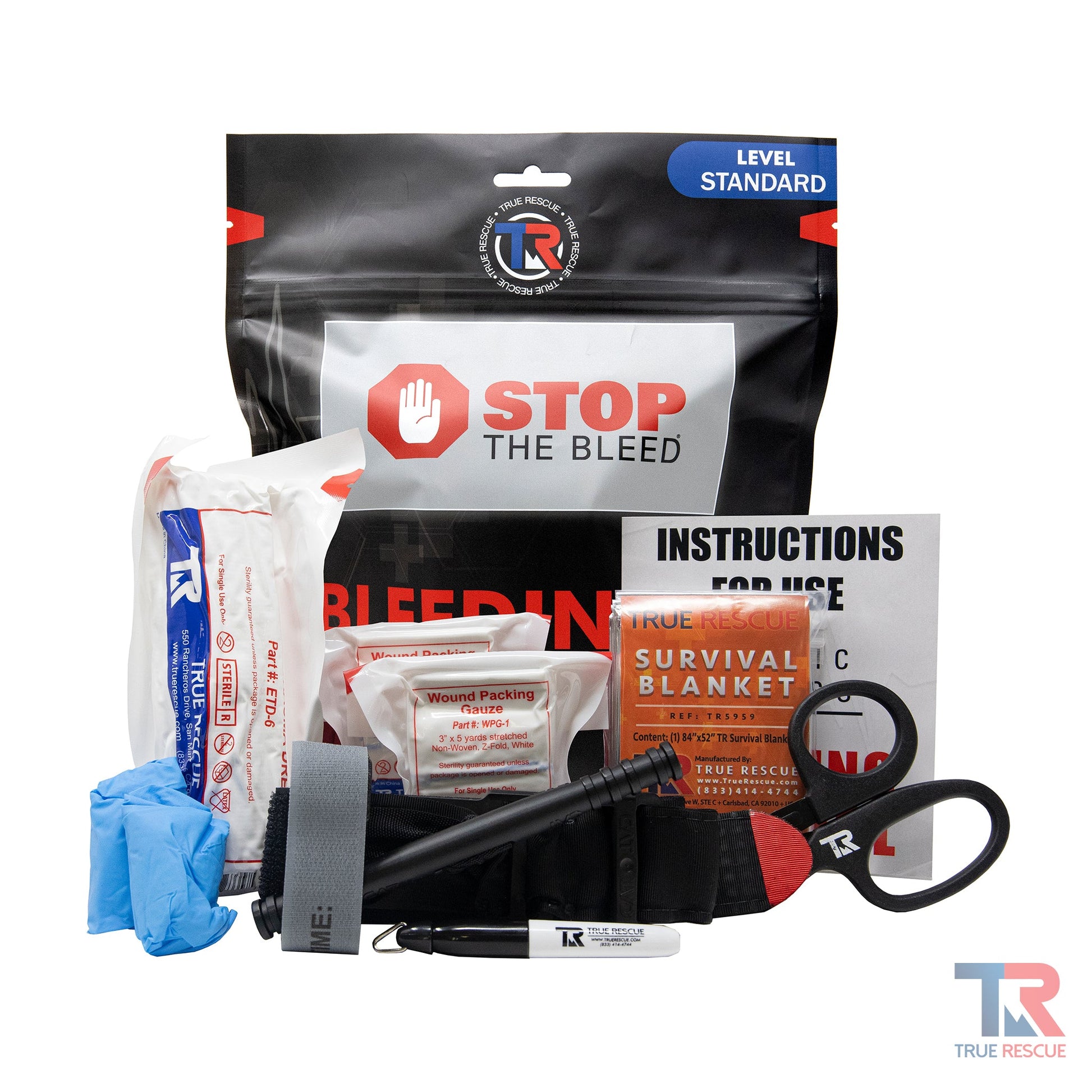
An IFAK, or Individual First Aid Kit, started in the military as a small trauma kit every service member carries for themselves. It is not a boo-boo kit. It is built around the injuries that can kill in minutes: massive bleeding and chest wounds. Hunters, shooters, first responders and anyone who spends time far from help have adopted the idea.
This is general information, not medical training. Take a STOP THE BLEED or TCCC-based course so you know how to use everything you carry.
The core of every IFAK
1. Tourniquet
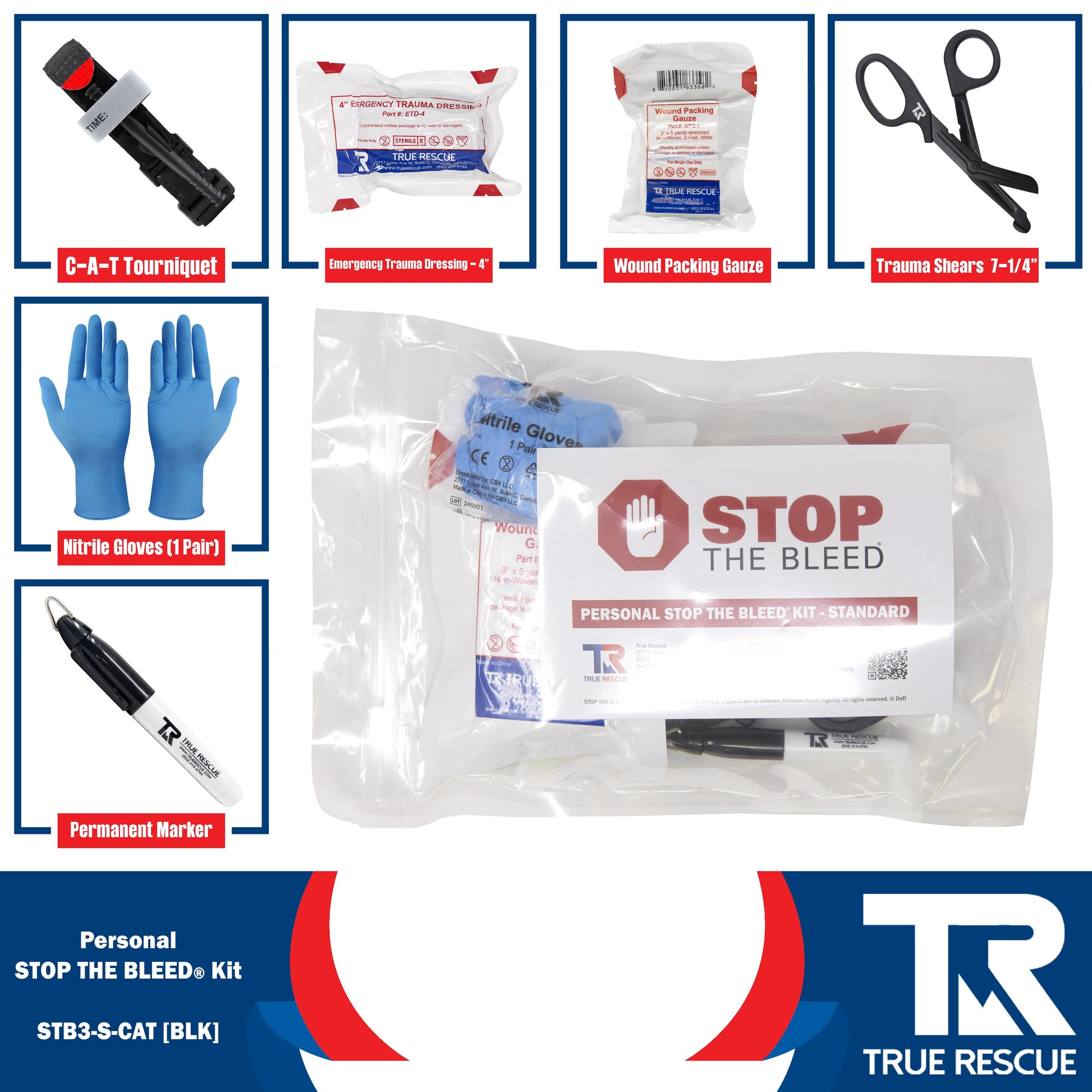
A windlass tourniquet recommended by the Committee on Tactical Combat Casualty Care (CoTCCC), such as the C-A-T. Carry it where either hand can reach it.
2. Wound packing gauze
Plain or hemostatic gauze for wounds where a tourniquet will not work. Wound packing gauze is compact and inexpensive.
3. Pressure dressing
An emergency trauma bandage holds pressure on a packed wound.
4. Chest seals
Vented chest seals for penetrating chest wounds. Carry two, one for an entry and one for an exit wound.
5. Gloves
Nitrile, sized for you.
6. Trauma shears
Trauma shears cut through clothing, boots and webbing fast.
7. Marker
A mini permanent marker for writing the tourniquet time.
Useful additions
- A SWAT-T as a backup, pressure wrap or for kids and pets
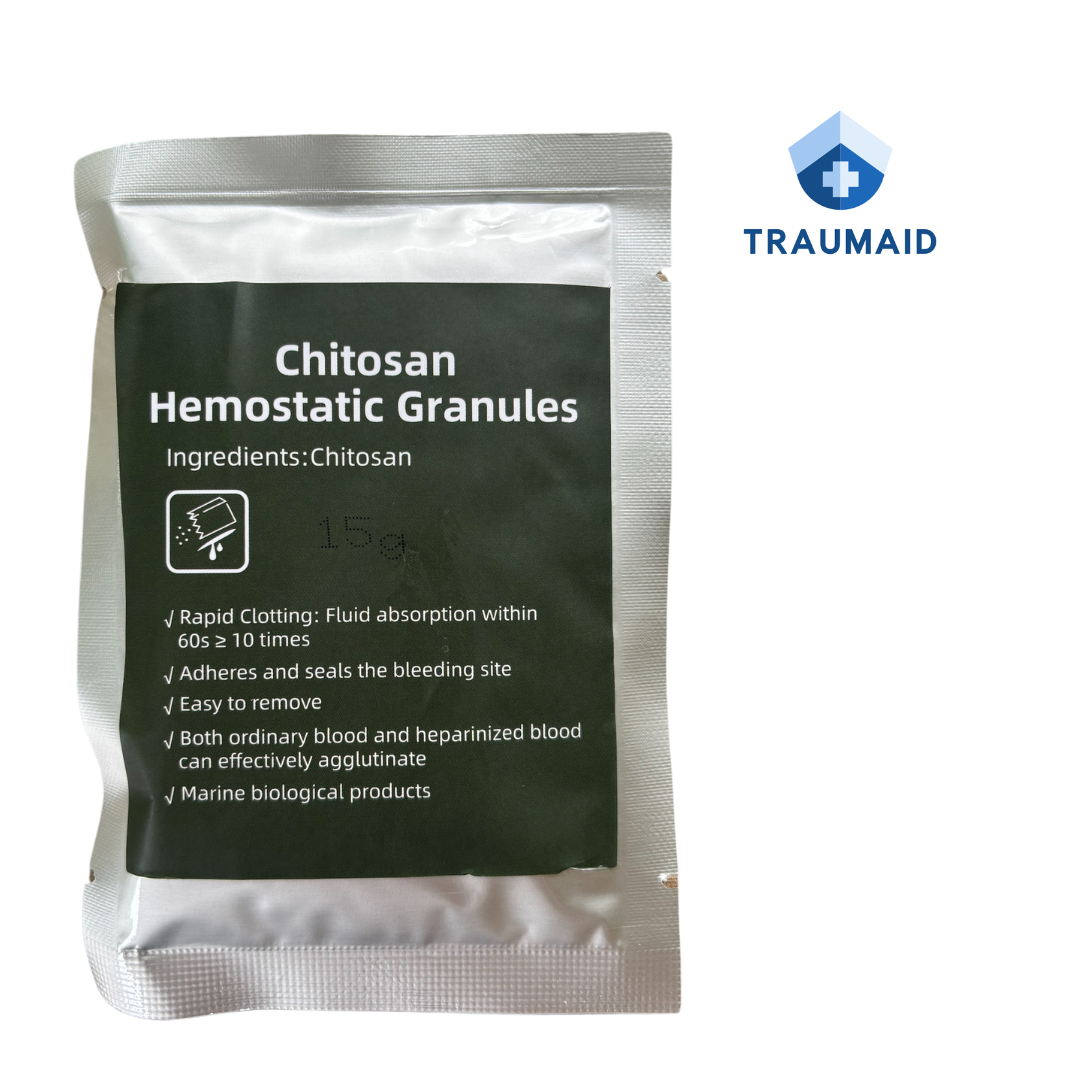
- Chitosan hemostatic granules
- Emergency blanket for shock and cold
- Nasopharyngeal airway, only if you are trained to use it
What to leave out
Keep minor first aid like adhesive bandages, antiseptic and blister care in a separate kit. An IFAK needs to open in the dark, under stress, and put the right item in your hand. Clutter slows you down.
Buy a kit or build one?
Building your own lets you choose each item. Buying a complete kit guarantees everything fits together and is from a known source, which matters for tourniquets, since counterfeits are common. The Personal STB Kit comes with a CoTCCC-approved tourniquet, trauma dressing, wound packing gauze, shears, gloves and a marker, with chest seals in the Intermediate and Premium levels.
How to carry an IFAK
- On a belt or plate carrier: in a MOLLE pouch where either hand can reach it.
- In a pack: at the top or in an outside pocket, never buried.
- In a vehicle or boat: in a fixed, known spot everyone on board knows.
Keep it clean and dry
Gauze and dressings are sterile until their packaging fails. Mud, rain, sweat and salt spray break that down fast. A sealed, waterproof pouch protects the whole kit. The Large Waterproof MOLLE Pouch is IP67 rated, mounts to MOLLE webbing and has elastic loops inside to organize an IFAK.
Shop kits and components in STOP THE BLEED and Trauma Kits.
FAQ
What does IFAK stand for?
Individual First Aid Kit.
How often should I check my IFAK?
At least once a year, and after any trip where it got wet or banged around. Replace expired or damaged items.