If you have looked at bleeding control gear, you have seen two names over and over: the C-A-T (Combat Application Tourniquet) and the SWAT-T (Stretch, Wrap and Tuck Tourniquet). Both are designed to help stop life-threatening bleeding, but they are very different tools.
General information only. Get hands-on training before relying on any tourniquet.
How the C-A-T works
The C-A-T is a windlass tourniquet. You wrap the strap around the limb above the wound, pull it tight, then twist a rod (the windlass) to tighten further until bleeding stops, and lock the rod in a clip. It can be applied one-handed to your own arm or leg.
- Recommended by the Committee on Tactical Combat Casualty Care (CoTCCC)
- Mechanical advantage from the windlass makes it effective on large limbs like the thigh
- Widely used by the military, police and EMS
How the SWAT-T works
The SWAT-T is a wide, flat band of thick elastic. You stretch it hard and wrap it around the limb in overlapping layers, then tuck the end under the last wrap. Printed shapes on the band change when it is stretched enough, giving you a visual cue.
- Multi-use: works as a tourniquet, a pressure dressing or an elastic wrap
- Very thin and light; fits in a pocket, wallet-size kit or small pouch
- Works on small limbs, which makes it a popular choice for children and working dogs
- Low cost
The honest comparison
| C-A-T | SWAT-T | |
|---|---|---|
| Type | Windlass | Elastic wrap |
| CoTCCC recommended | Yes | No |
| Best on large adult limbs | Yes | Harder to get tight enough |
| Pressure dressing use | No | Yes |
| Kids and pets | Limited | Good fit |
| Size and weight | Bulkier | Flat and light |
For a primary limb tourniquet on an adult, especially on the thigh, most trainers recommend a CoTCCC windlass tourniquet like the C-A-T. The SWAT-T earns its place as a backup, a pressure wrap, and a tourniquet for smaller limbs.
Why many people carry both
A C-A-T on your belt or in your IFAK, and a SWAT-T in a pocket, glove box, first aid kit or pet kit, covers more situations than either alone. The SWAT-T also doubles as the bandage that holds pressure on a packed wound.
Beware of counterfeits
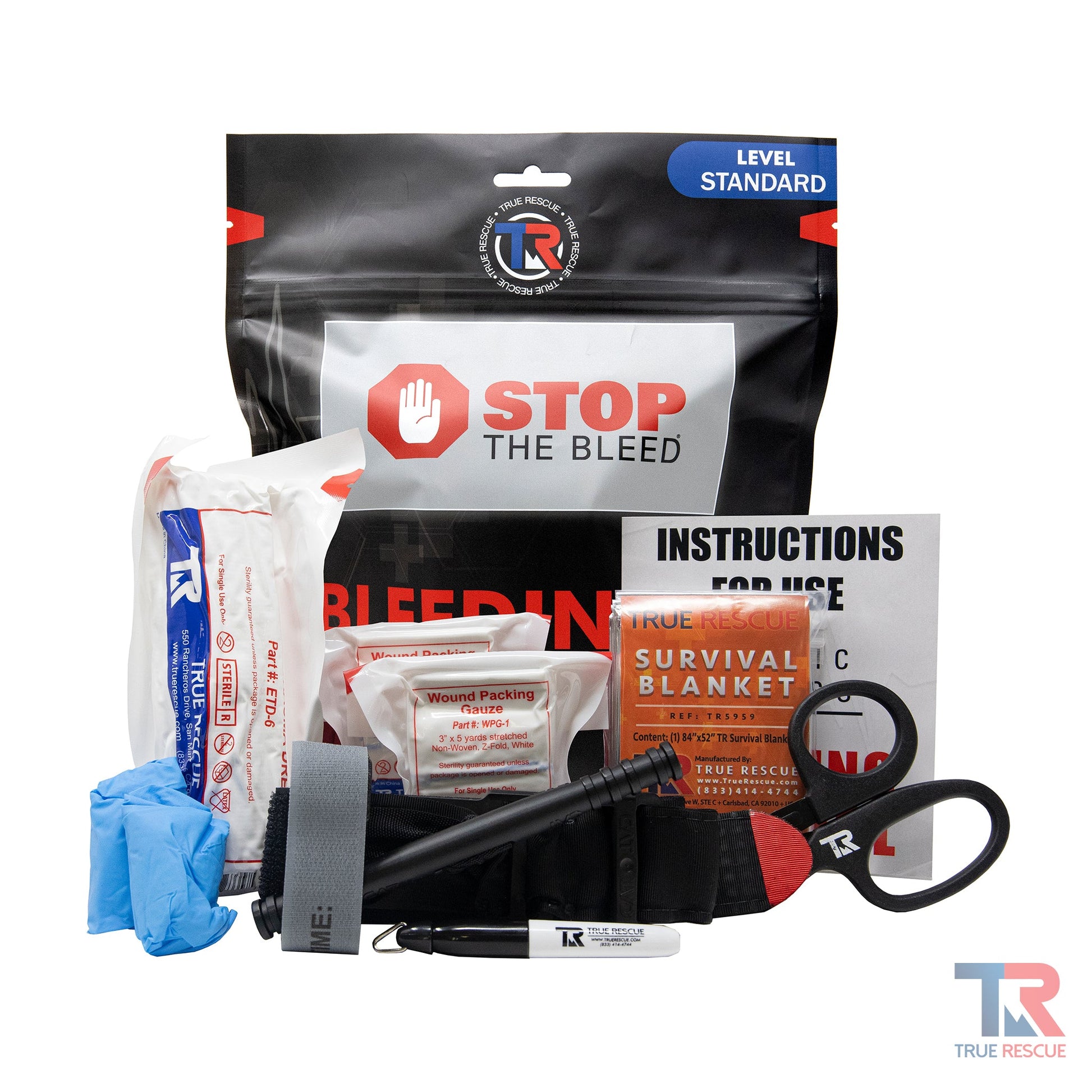
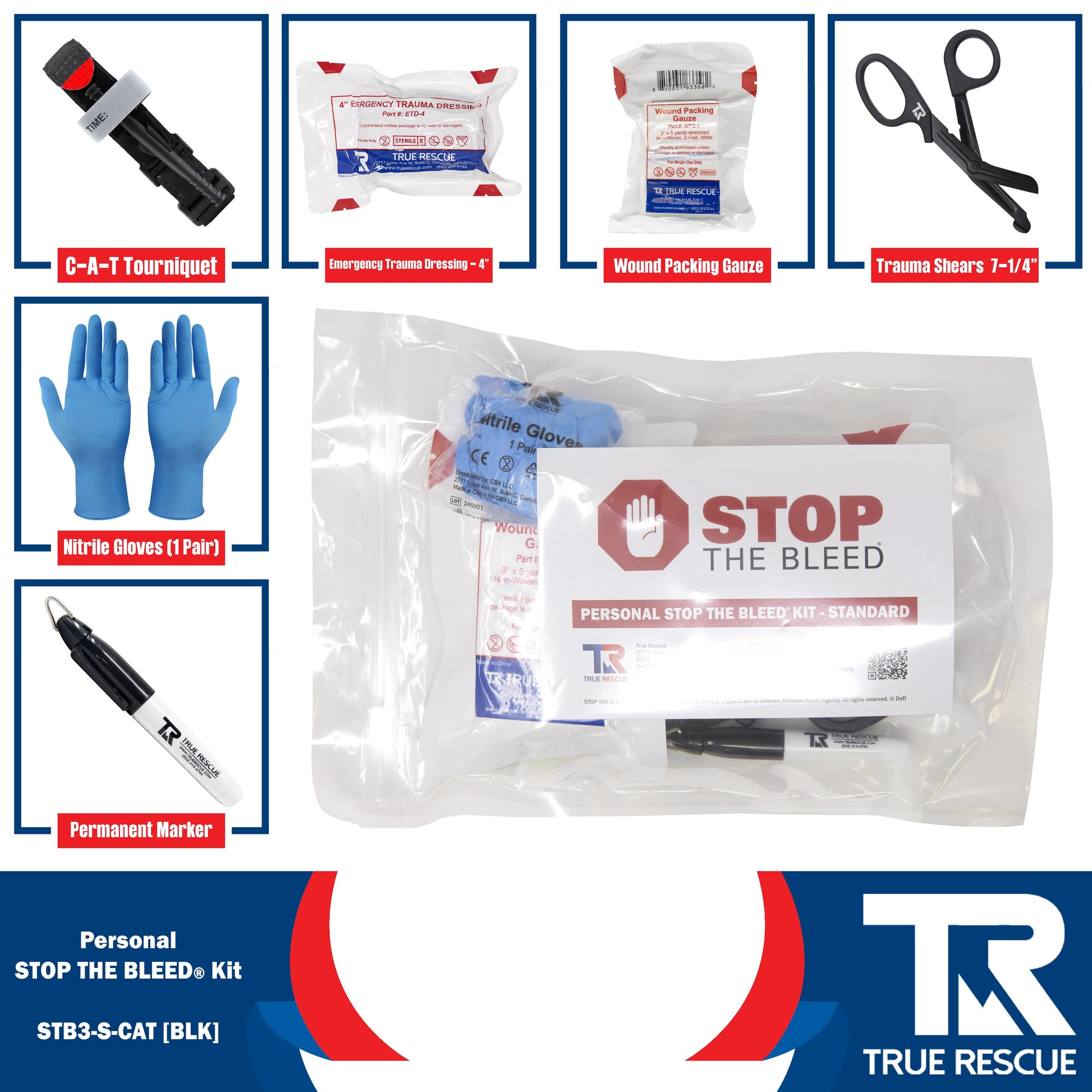
Fake tourniquets are common online and can fail under load. Buy from trusted sources. Our Personal STB Kit from True Rescue includes a CoTCCC-approved tourniquet, and the SWAT-T is available on its own.
Store them right
Heat, UV and moisture break down elastic and straps over time. Keep tourniquets in a sealed pouch, like the Small Waterproof MOLLE Pouch, and never practice with the one you carry. Keep a trainer for practice.
FAQ
Can a SWAT-T be used on the thigh?
It can be applied there, but it is harder to get enough pressure on a large thigh than with a windlass tourniquet. Training helps.
How long can a tourniquet stay on?
Leave it on and let medical professionals remove it. Write the time it was applied on the tourniquet or the patient.