Uncontrolled bleeding is one of the leading causes of preventable death after an injury, and it can take a life in minutes, often before first responders arrive. The STOP THE BLEED campaign was created to put the tools and training in bystanders' hands. A STOP THE BLEED kit is the tool part.
This guide is for general information. It is not a substitute for hands-on training. Take a STOP THE BLEED class and always call 911 in an emergency.
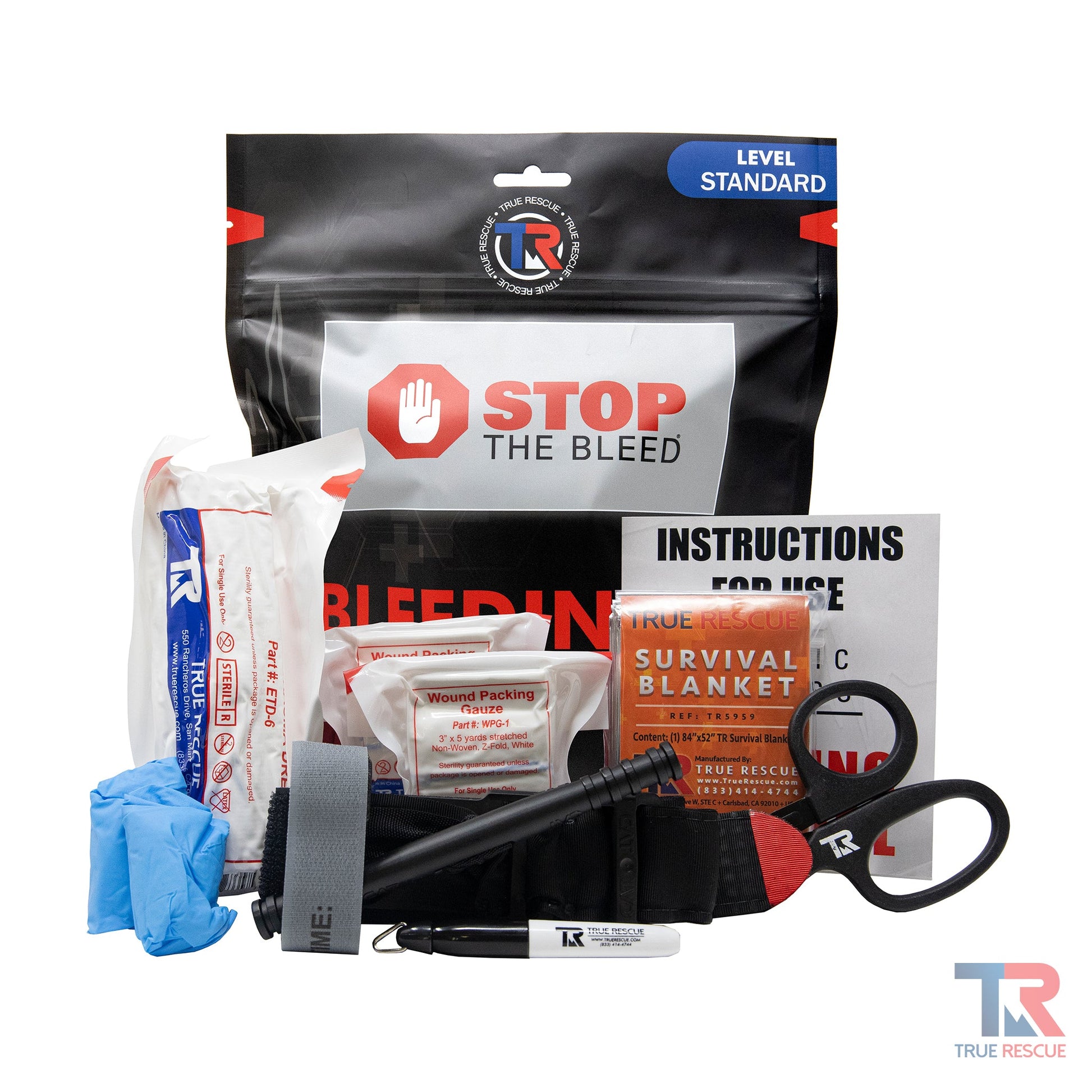
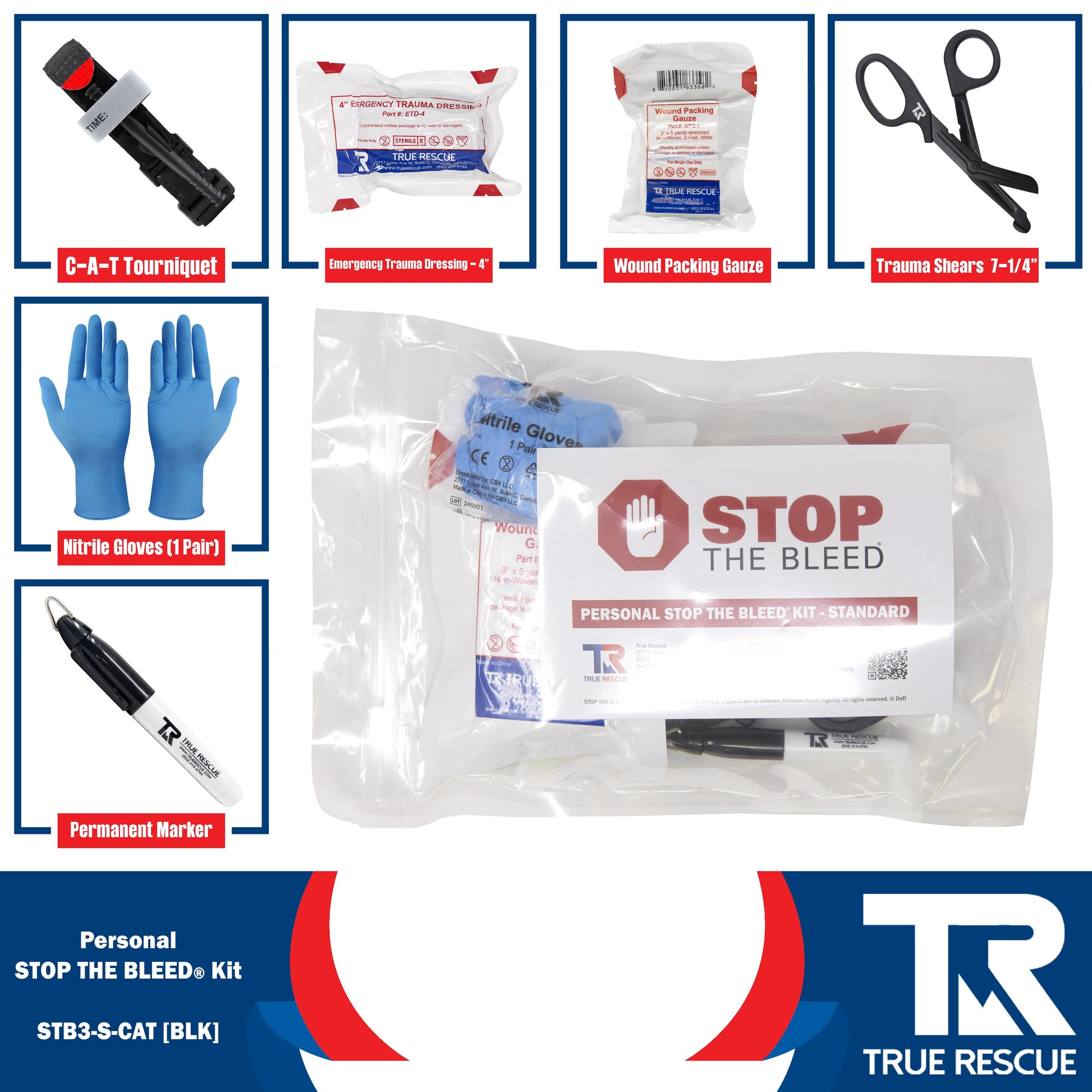
The core contents
Tourniquet
The most important item. A tourniquet stops arterial bleeding from an arm or leg. Look for one recommended by the Committee on Tactical Combat Casualty Care (CoTCCC), such as the C-A-T.
Wound packing gauze
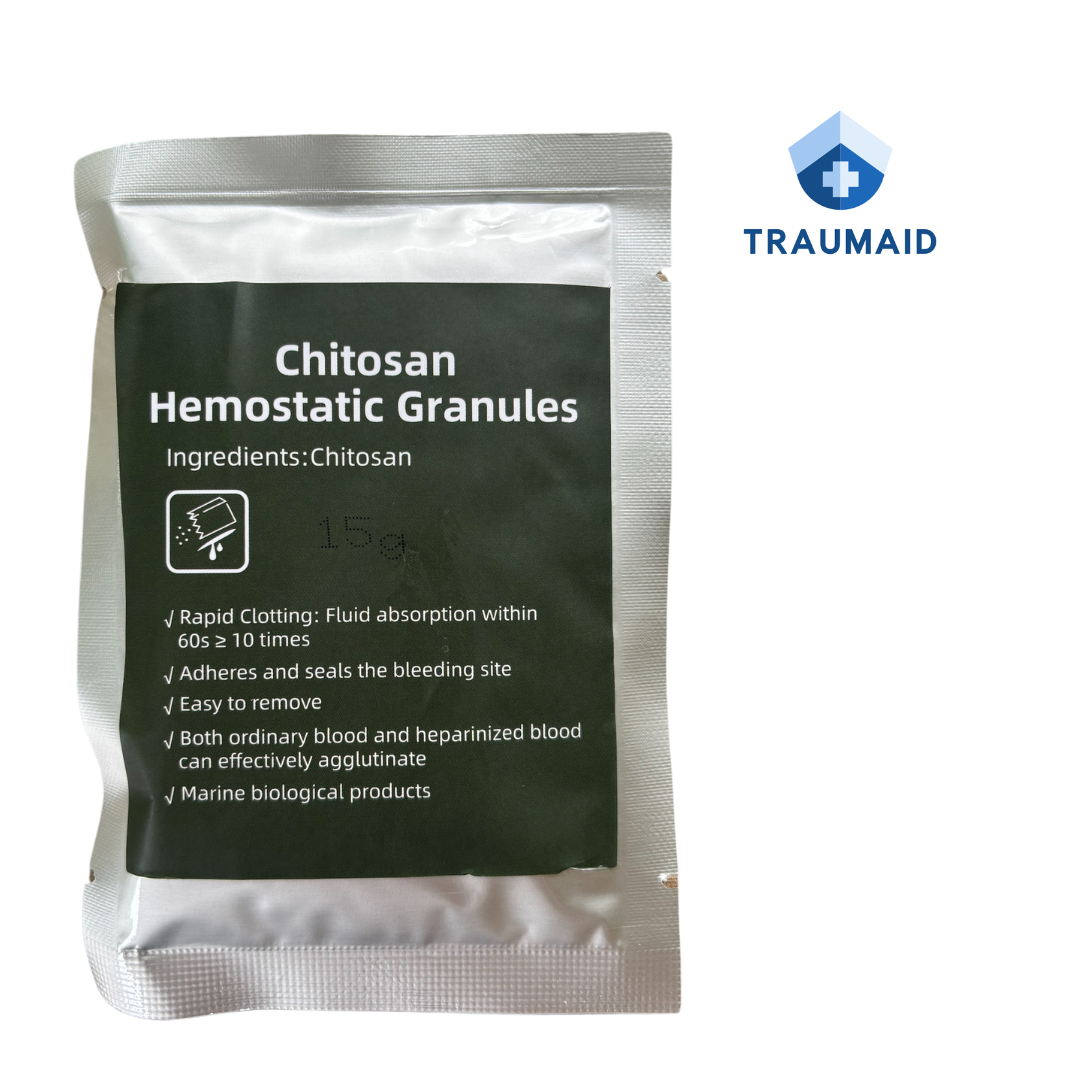
For wounds where a tourniquet cannot go, like the groin, armpit or neck, gauze is packed firmly into the wound and held with pressure. Some kits use hemostatic gauze that helps blood clot.
Pressure or trauma dressing
An elastic bandage with a pad that holds pressure on a wound once it is packed.
Gloves
Nitrile gloves protect you and the patient.
Trauma shears
Blunt-tipped shears cut away clothing fast so you can find the source of the bleeding.
Permanent marker
Used to write the time the tourniquet was applied. Responders need to know.
Instruction card
Quick steps for a stressed bystander.
Kit levels
Many kits come in tiers. Our official STOP THE BLEED Kit comes in Standard, Intermediate and Premium versions. Intermediate kits typically add vented chest seals; Premium kits add items like a hemostatic dressing. The Mylar version has the same components in lower-cost packaging, and the Personal STB Kit is sized to carry every day.
The basic steps (ABC)
- A: Alert. Call 911.
- B: Bleeding. Find where the bleeding is coming from.
- C: Compress. Apply pressure with your hands, pack the wound, or apply a tourniquet to an arm or leg.
A class will teach you where and how tight to apply a tourniquet and how to pack a wound correctly. It takes about an hour and many are free.
Where to keep a kit
- Home and garage
- Vehicle glove box or seat back
- Boat, especially near the helm
- Office, church, school and range bag
- Hunting and hiking packs
Moisture and grime can damage sterile packaging and gauze. In a truck, on a boat or in a hunting pack, keep your kit in a sealed bag like a Large Waterproof MOLLE Pouch or the Waterproof Field Kit.
Build or restock your own
Individual items are available too: SWAT-T, wound packing gauze, trauma shears and a mini marker. Browse everything in STOP THE BLEED and Trauma Kits.
FAQ
Do I need training to use a STOP THE BLEED kit?
The kits are designed for bystanders, but training makes a big difference. Find a class through the official STOP THE BLEED program.
Do kit items expire?
Gauze and hemostatic products have expiration dates on the packaging. Check your kit once a year and replace anything that has been opened or damaged.